Stainless Steel Flange Manufacturers Guide
Finding reliable stainless steel flange manufacturers in your region requires understanding material grades, industry certifications, and application-specific requirements for food grade, marine, and industrial uses.
Food Grade Sanitary Stainless Steel Flanges
Food and beverage, pharmaceutical, and biotech industries require sanitary flanges that meet strict hygiene standards.
Material Requirements
- Grade: 304/304L or 316/316L stainless steel
- Surface Finish: Ra ≤ 0.8μm (32 Ra) for product contact
- Polishing: Electropolished or mechanically polished
- Certification: FDA 21 CFR 177, EC 1935/2004
Sanitary Flange Types
- Tri-Clamp: Quick disconnect, dairy industry standard
- DIN 11851: European dairy standard
- ISO 2852: International sanitary standard
- SMS: Scandinavian standard
Applications
- Dairy processing equipment
- Beverage production lines
- Pharmaceutical manufacturing
- Biotech fermentation systems
- Food processing piping
Corrosion Resistant Flanges for Marine Use
Marine and offshore applications demand superior corrosion resistance against saltwater and harsh environments.
Recommended Materials
| Material | Applications | PREN |
|---|---|---|
| 316L | General marine, boat fittings | 24-26 |
| 2205 Duplex | Offshore platforms, seawater | 32-38 |
| 2507 Super Duplex | Deep sea, high chloride | 40-45 |
| 904L | Chemical tankers | 34-38 |
Marine Applications
- Shipbuilding and marine engineering
- Offshore oil and gas platforms
- Desalination plants
- Seawater cooling systems
- Port and harbor infrastructure
Custom Size Flange Fabrication
For industrial pipeline projects requiring non-standard dimensions:
Customization Options
- Oversized Flanges: Up to 4 meters diameter
- Special Pressure Classes: Custom ratings
- Unique Drilling: Non-standard bolt patterns
- Special Alloys: Hastelloy, Inconel, Monel
- Heat Treatment: Solution annealing, aging
Manufacturing Capabilities
- CNC machining for precision dimensions
- Plate rolling for large diameters
- Forging for high-pressure applications
- Welding and assembly services
Stainless Steel Grade Selection
304/304L (Most Common)
- General corrosion resistance
- Food and pharmaceutical grade
- Cost-effective option
- Temperature: -200°C to 800°C
316/316L (Marine Grade)
- Superior chloride resistance
- Marine and chemical applications
- Molybdenum addition (2-3%)
- Better high-temperature strength
321 (High Temperature)
- Titanium stabilized
- Prevents carbide precipitation
- Welding applications
- Temperature up to 900°C
Export Certifications
- CE Marking: European market requirement
- PED: Pressure Equipment Directive
- ISO 9001: Quality management
- EN 10204 3.1: Material inspection certificate
- SGS/BV Inspection: Third-party verification
DN100 Flange Common Sizes
| Standard | Class | OD | BC | Bolts |
|---|---|---|---|---|
| ASME B16.5 | 150 | 229mm | 191mm | 8xM16 |
| EN 1092-1 | PN16 | 220mm | 180mm | 8xM16 |
| JIS B2220 | 10K | 210mm | 175mm | 8xM16 |
| GB/T 9115 | PN16 | 220mm | 180mm | 8xM16 |
Lead Time and MOQ
- Standard Items: 7-15 days
- Custom Sizes: 20-30 days
- MOQ: 10-50 pieces (negotiable)
- Sample: Available within 3-5 days
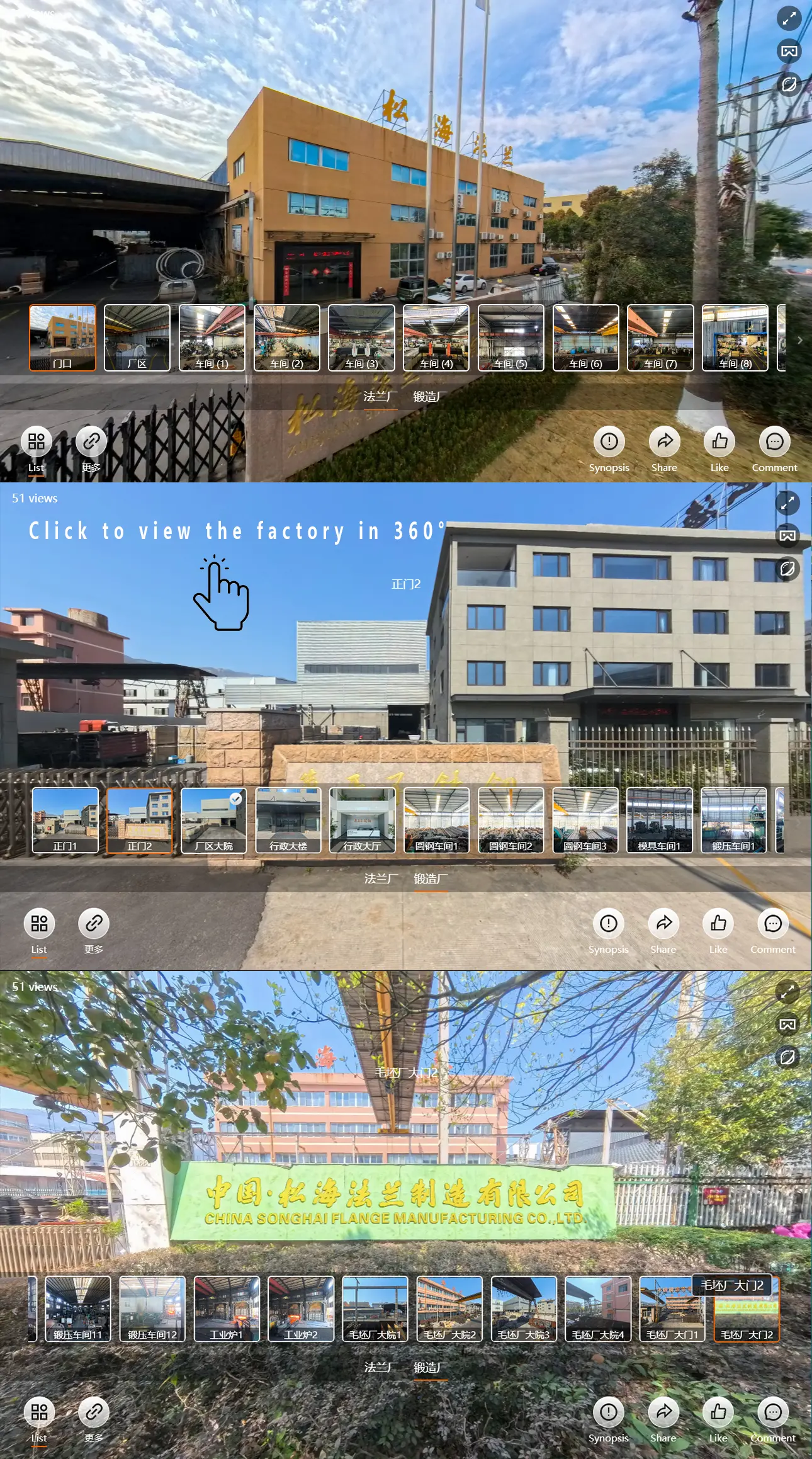
Songhai Flange manufactures stainless steel flanges for food grade, marine, and industrial applications with full export certifications. Contact us for custom fabrication and wholesale pricing.
WhatsApp: +86-18658777855
Email: 1007788887@qq.com
You may also like
DIN Flanges vs ANSI Flange: ANSI Class 150, PN Rating and Selection Guide
A practical guide comparing DIN flanges and ANSI flange standards, including ANSI Class 150, PN meaning, flange rating ANSI systems, bolt patterns, dimensions and selection tips.
Flange Coupling Guide: Coupling Flange Type, Flanged Coupler and Shaft Applications
A practical guide to flange coupling, coupling flange type selection, flanged coupler structure, flange shaft coupling applications, installation and maintenance.
What Is an Orifice Flange? Orifice in Piping, Orifice Pipe and Flow Measurement Guide
A practical guide explaining what an orifice flange is, how an orifice in piping works, orifice pipe flow measurement, pressure taps, orifice plates and selection tips.